Why a Door Handle Tells You Where to Push
Learn how a door handle signals push or pull through its shape and placement, so you can read unfamiliar doors and spot why familiar designs mislead.
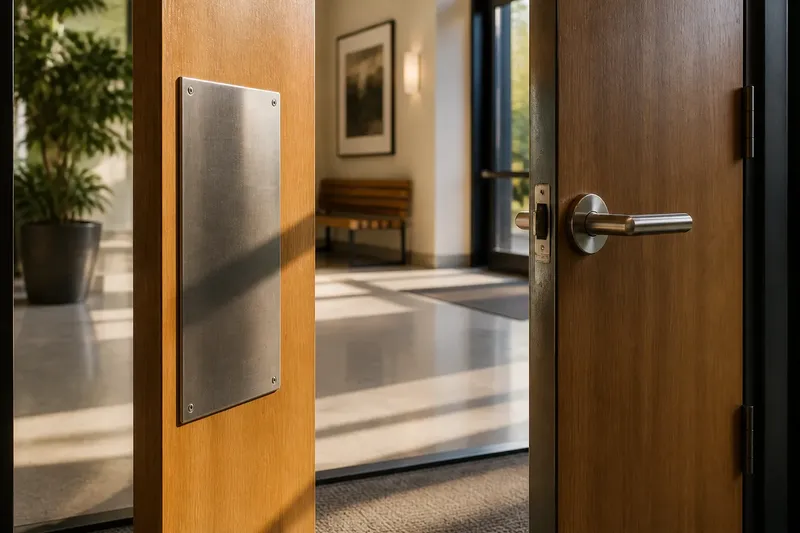
A door handle tells you where to push when its shape and position make pressure feel like the natural next move. A broad, flat plate at hand height invites a palm; a projecting bar invites a grip. Those clues are not decoration. They turn a door’s intended action into something you can read before trying it.
Door handles are a compact lesson in affordance: the relationship between an object’s form and the actions a person perceives as possible. Shape offers one clue, placement adds another, and convention supplies expectations. When those signals agree, a door feels easy to use. When they conflict, even a familiar handle can prompt a wrong first move.
What does a door handle tell you to do?
A handle suggests an action by showing where a hand can go and what kind of force might work. A horizontal lever usually says “grip and turn,” while a large, smooth plate often says “press here.” A vertical bar can suggest pulling, pushing, or both; its form alone does not settle the question.
Designers sometimes describe these cues as affordances, but the useful distinction is between what an object allows and what its appearance suggests. A hinged door may physically open in either direction if its hardware permits, yet its plate, bar, or recessed grip can make one direction seem intended. The suggestion may be accurate—or misleading.
Look at the part your hand is meant to meet. A handle that sticks out from the door offers room to curl fingers around it. A flat plate offers a surface for the palm. A recessed pull gives fingers a place to hook inside. Those forms make different actions legible without a written instruction.
How do shape and placement signal push or pull?
Shape describes the hand movement; placement hints at where force should go. A plate set at a comfortable palm height, with no gripping feature, is a strong push cue. A handle mounted where fingers can wrap around it is a pull cue. A bar spanning much of the door can support either action, so its location and the door’s other cues matter more.
Direction also affects how a handle feels. A horizontal lever can be operated by hand, elbow, or forearm, while a small knob asks for a more precise grip and turning motion. A broad push plate can help when someone is carrying a bag, but only if it is on the side where pushing opens the door. Hardware does not explain the hinge, so placement must carry some of that message.
Imagine a person approaching a door with a coffee mug in one hand. If the near side has a broad plate and the door opens away from them, a free palm can press it naturally. If the same plate is on a side that requires pulling, the shape gives the wrong instruction; the person may press, pause, and then look for another clue.
Pay attention to the relation between hardware and the door edge, not just the hardware itself. A pull handle near the meeting edge may make sense on a door that swings toward you. A push plate on the opposite face can complete the pair. If both faces use identical plates, the door may be relying on convention, signage, or the way it is positioned in the room.
Why can a familiar handle still mislead you?
Familiarity is not the same as clarity. People learn that a lever turns, a knob twists, and a plate invites a push, but those expectations come from repeated encounters rather than a universal code. A building can use a familiar-looking handle on an unusual door, and the old association may lead your hand astray.
Some handles are deliberately symmetrical. A straight bar may look equally suitable for pushing and pulling, while the latch mechanism allows only one movement. In that case, the visitor may have no dependable clue until trying the door. A door closer, a threshold, or a neighboring wall can offer context, but none is as direct as hardware that clearly distinguishes the two sides.
Another source of confusion is a handle that performs two jobs. A lever may both release a latch and act as a place to pull; the user has to turn it before the door moves. If the lever does not move freely, people may push against it or tug without releasing the latch. Clear form can still leave an action sequence unclear.
Conventions also vary across buildings and regions. A person who expects a particular style of latch may meet a different mechanism, or a push plate may be paired with a door that opens toward them because of a special layout. The more a door depends on learned habits, the more likely it is to surprise someone who has not learned that local pattern.
How can you read an unfamiliar door without guessing?
Start with the most direct physical cue: a plate, bar, lever, knob, or recessed grip. Ask what your hand can comfortably do there. A flat, broad surface supports a palm; a projecting grip supports fingers; a lever suggests a turn. This gives you a likely action, not certainty.
Then scan the door for supporting clues. A visible hinge can help you infer the swing, although concealed hinges remove that signal. A latch edge, door closer, or sign may add context. Look at how nearby doors are arranged, too, but do not assume every door in a building works alike.
If the signals still conflict, use a light, controlled touch rather than leaning your weight into the door. Try the action suggested by the hardware, then stop if the door resists. A stuck, locked, or heavy door may need attention rather than more force. For an accessible public entrance, clear signage and an operating button can matter as much as the handle itself.
Say you reach an unfamiliar office door with a long vertical bar and no sign. You can see the hinges on your side, but the bar could plausibly be used either way. Instead of committing to a hard push, you test the bar gently in the direction suggested by the door’s visible swing; if it does not move, you pause and look for a latch or instruction rather than forcing it.
What makes a door handle easier for more people to use?
A handle is easier to interpret when its form matches the action and remains reachable for different bodies and situations. A lever can be simpler to operate than a small knob for someone with limited grip, while a broad plate can be useful when hands are occupied. The right choice depends on the door, its users, and the applicable accessibility requirements.
Contrast helps people locate hardware. A dark handle on a light door, or a clearly outlined plate, is easier to spot than hardware that blends into the surface. Visibility does not tell someone whether to push or pull by itself, but it makes the action cue available sooner.
Consistency helps, too. If doors serving the same purpose use the same kind of hardware on the same side, people can act with less hesitation. But consistency should not preserve a confusing pattern just because it is familiar. If a door’s function differs, its cues should make that difference apparent.
For public, workplace, or residential projects, choose and position hardware according to the door’s actual use, accessibility needs, manufacturer instructions, and applicable local requirements. A qualified design or building professional can help where compliance or life safety is involved.
What questions help decode a confusing door?
Does a push plate always mean the door opens away from me?
It usually signals that a palm can press the surface, but it cannot prove the door’s swing. Check the hinges, latch edge, signage, or another clear clue before applying force.
Does a handle always mean I should pull?
No. A handle can provide a grip for pulling, or it may be a lever that must turn to release the latch. Notice whether the hardware moves and whether the door offers a separate push surface.
Why do some doors have bars on both sides?
A bar can be designed to work as a push or pull grip, especially where a door’s use or layout calls for flexibility. If both sides look alike, the design may leave the intended action less obvious.
What should I do if the handle gives mixed signals?
Try the least forceful action suggested by the hardware, then stop if it resists. Look for a sign, accessible opener, or another entrance rather than pushing harder on a door that may be locked or malfunctioning.
What should designers change when a handle confuses people?
First identify the moment of hesitation. Do people press a pull handle, tug a push plate, or turn a lever without releasing the latch? Each response points to a different mismatch between form, placement, and expected movement. A vague instruction such as “make it clearer” is less useful than naming the exact mistaken action.
Then make the physical cue agree with the door’s operation. A plate can mark the push side; a distinct grip can mark the pull side; a lever can signal that a turn comes before movement. If a single bar must serve both directions, signs or contrasting hardware may help, though they should not replace an accessible, understandable design.
Test the design concept by observing how people approach it in ordinary use, with permission and without creating an obstruction. Notice where their eyes go, what their hands reach for, and whether they need to stop and reconsider. The aim is not to make every door look identical; it is to ensure the door’s visible cues support its actual action.
A good door handle is a small piece of instruction you can feel. When shape and placement agree, the hand moves with little thought; when they disagree, the pause is useful evidence that the object is asking for interpretation. The next time a door catches you out, notice whether the problem lies in the action itself or in the cue that promised it.