A Quiet Corner for Reading in a Shared Room
A quiet reading corner in a shared room can feel distinct without moving the furniture. Use orientation, a small boundary, and focused light to shape it.
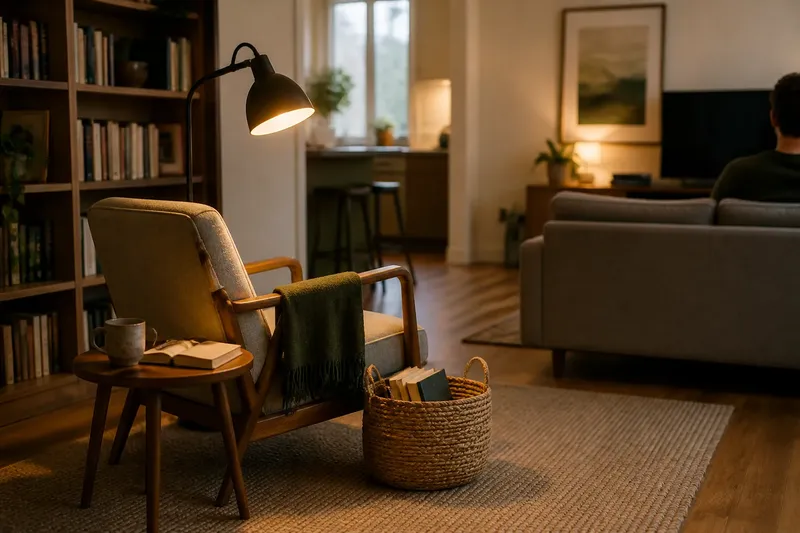
A quiet reading corner in a shared room can feel separate without moving the sofa or claiming a whole wall. Start by deciding what the reader should see, what should screen out distractions, and where a focused light can fall without spilling across the room.
This is a small design problem, not a renovation. A chair, a boundary, and a lamp can create a legible place for reading while the rest of the room keeps its usual purpose. Plan it over a week so you can notice how the spot works at different times, then make only the adjustments the room asks for.
Choose the reading corner by its sightline
Before shifting objects, sit in the likely reading seat and look around. A useful orientation gives the reader something calm to face, such as a bookcase, a plain wall, or a view through a window. It also avoids placing the reader directly in the main path between a doorway, the kitchen, and the couch.
Notice what catches your eye from the seat: a television, a busy countertop, people crossing the room, or a bright window. You do not have to eliminate every distraction. Turning the chair slightly can make the busiest part of the room less prominent while keeping the reader connected to everyone else.
Check the view from the other side, too. A reading seat that blocks a walkway or faces directly into a shared television may make the corner feel awkward to others. Keep the chair’s footprint and nearby table within the room’s existing circulation, and make sure people can pass without asking the reader to move.
On the first day, test likely seats before choosing one. A dining chair may reveal a better angle than the armchair, even if it is less comfortable for a long stretch.
Use a boundary that marks the spot lightly
A boundary tells the eye where the reading area begins. It can be as modest as a small rug beneath a chair, a low side table, a basket beside the seat, or a floor lamp positioned at the edge. Choose something that already belongs in the room or can be moved easily; the goal is a clear cue, not a partition.
Think about what the boundary does from both sides. A basket can hold a book and mark the chair’s edge, but a tall stack of objects may make the shared room feel crowded. A small rug can distinguish the seat from the walking route, but it should lie flat and leave paths clear. A plant can soften the view, provided it does not block light or narrow the passage.
Imagine a household where one person reads beside the sofa while another uses the room to watch television. The reader turns the chair toward a bookcase, places a low table beside it, and uses a woven basket for current books. The expected observable result is a seat that reads as a separate activity area, while the sofa and walking route remain available.
Choose one boundary cue first. Several competing markers can make a modest corner look like a separate room that the space cannot support.
Give the seat a focused light source
Reading light should reach the page without becoming the room’s brightest distraction. A shaded floor lamp beside the chair or an adjustable table lamp can direct light toward the book. Position the source so the shade hides the bulb from the reader’s usual view and the light does not shine straight into another person’s seat.
Check the lamp from the actual reading position. Open a book, look down at the page, and notice whether your hand or head casts a shadow across it. Then look toward the rest of the room: a bright bare bulb or a strong reflection in a screen can make the corner more disruptive than welcoming. A shade and a change of angle often help more than adding another lamp.
Daylight changes across the room, so do not judge the spot at only one time. If the chair is near a window, see whether glare reaches the page or screen during the hours you usually read. A curtain or blind can soften the view when needed, but keep the arrangement simple enough that the reader can adjust it without interrupting everyone else.
Use the lamp’s controls and placement as intended, and follow the manufacturer’s directions for the fixture and bulb. If the room needs new wiring or a fixed electrical change, consult a qualified professional rather than improvising.
Set up the corner across one ordinary week
A short routine helps reveal whether the spot fits real use. Keep the main furniture in place throughout; change the seat, boundary, or light in small ways so you can tell which adjustment matters.
- Day one: Sit in two or three possible seats at a usual reading time. Compare sightlines, interruptions, and how easily others can pass.
- Day two: Choose the seat with the calmest workable orientation. Turn it toward a quieter view and keep the shared room’s main route open.
- Day three: Add one boundary cue, such as a side table or basket. Keep the area around the chair clear enough for ordinary movement.
- Day four: Place a lamp and read a few pages. Check shadows on the page, glare in the room, and whether the light reaches other people’s seats.
- Day five: Use the corner while someone else is doing a normal shared-room activity. Notice whether the chair feels distinct without making conversation or passage difficult.
- Day six: Remove anything that has become clutter or an obstacle. Keep only the objects that support reading or help mark the spot.
- Day seven: Try the arrangement at another time of day. Make one final adjustment if light, traffic, or the room’s usual activity changes the experience.
This routine is a way to observe the room, not a rule that every household must follow. If there is no time to use the corner each day, make the same checks over a longer stretch and adjust as ordinary routines allow.
What should the corner do when the room is busy?
How can a reading seat feel private without a screen?
Angle the chair away from the busiest sightline and use a low, familiar object to mark its edge. A basket, side table, or small rug can distinguish the reading spot while leaving people visible and the room open.
Where should a reading lamp go in a shared room?
Place it close enough to light the page, then check for shadows and glare from the seated position. Aim the shade away from other seats and screens, and keep the lamp outside the main walking route.
What if the room has no spare floor space?
Use a seat that already serves another purpose, such as an armchair or the end of a sofa, and give it a small portable cue. A book basket or compact lamp may define the activity without adding a new furniture footprint.
How can the reading corner work for more than one person?
Keep the boundary movable and the seat easy to share. A basket can hold different readers’ books, while a lamp with an accessible switch lets the person using the spot adjust the light without rearranging the room.
Keep the arrangement easy to reset
A reading corner in a shared room works best when it can return to the room’s other uses. Give the book basket a clear home, keep small items on the side table rather than across the seat, and leave enough open space for someone to sit down without first moving a pile.
If the corner starts to collect unrelated objects, reduce the boundary rather than adding storage around it. A single chair and one clear cue may communicate the reading purpose better than a cluster of accessories. The room should still make sense when the reader is away.
Pay attention to how people move through the room after the spot is in place. If someone repeatedly shifts the chair to pass, or the lamp is often turned away from glare, treat that as useful feedback. Adjust the orientation or move the boundary cue, then keep the rest of the arrangement steady.
A quiet reading corner does not need to hide its reader from the household. Its success is visible in small, ordinary signs: the book can be opened comfortably, the light stays on the page, and everyone else can keep using the room. Keep those conditions in view when you revisit the arrangement, and the corner can remain quiet without taking over the space.